Freight shipping from Hong Kong to Germany
The contents on this page:
Trade route details — Trust our expertise
Hong Kong serves as a hub for trade between China and Germany. In 2023, round €7.46 billion of Chinese deliveries (e.g. re-exports of electronics and components) were made via Hong Kong, resulting in around 3.9% of goods passing through Hong Kong as a gateway between mainland China and Germany.
Close trade relations exist between Hong Kong and Germany from both an economic and strategic perspective. Hong Kong serves as an important hub for goods from the Asia-Pacific region, particularly with regard to access to mainland China. At the same time, Germany is Hong Kong's most important trading partner within the EU.
Many German companies – for example, in the mechanical engineering, chemical, medical technology and luxury goods sectors – have been represented in Hong Kong for decades. On the other hand, Hong Kong also serves as a re-export centre for German importers of Chinese components and high-quality consumer goods, including jewellery, electronics and platinum products.
Exports Hong Kong – Germany: Outlook & Opportunities
Economic relations between Hong Kong and Germany are traditionally close. Hong Kong serves as a gateway to the Asian market for German companies and vice versa. Since 2009, Hong Kong has been represented by the Hong Kong Economic and Trade Office (HKETO) in Berlin, which further strengthens bilateral relations.
Despite global challenges, Hong Kong remains a central hub for the flow of goods to Europe. Customs clearance is efficient, the infrastructure is state-of-the-art, and the location is particularly attractive for high-value goods and time-critical shipments.
Work on digital customs procedures and optimised data transmission is intended to further accelerate logistics processes.
In addition, there is increasing regulatory harmonisation between the EU and Hong Kong, for example in the areas of product safety, environmental standards and technical conformity, which could lead to further simplification of goods traffic in the medium to long term.
Key exports from Hong Kong to Germany (2023)
- Precious metals (ores, scrap) – e.g. gold and silver scrap; accounted for around 27.5% of Hong Kong's exports to Germany in 2023.
- Jewellery and jewellery goods – these accounted for around 21.5% of exports in 2023.
- Silver and platinum – precious metals, which together accounted for approximately 16.1% of export values in 2023.
- Electronic components – high-quality parts (e.g. semiconductors); also significant for the trade lane.
- Works of art and antiques – in smaller quantities but with a high individual value, part of the export portfolio.
Popular Hong Kong–Germany trade routes
Sea freight
- Hong Kong (HK) – Hamburg
The most important direct connection for container freight between Hong Kong and Germany. Hong Kong is one of Asia's largest container ports, while Hamburg is Germany's most important seaport with extensive connections to Asia. - Hong Kong (HK) – Bremerhaven
Often used as an alternative to Hamburg, especially for freight consolidation. Bremerhaven offers high capacity for Far East traffic and is suitable for time-critical container handling. - Hong Kong (HK) – Rotterdam with onward transport to Germany
A flexible route via Europe's largest port. Ideal for customers who prefer multimodal solutions – with fast onward transport by inland waterway, train or truck, primarily to southern Germany.
Air freight
- Hong Kong (HKG) – Frankfurt am Main (FRA)
The most important air freight connection between Hong Kong and Germany. Ideal for high-value, urgent or sensitive goods such as electronics or fashion. - Hong Kong (HKG) – Leipzig (LEJ)
Supplementary connection, which is used in particular for time-critical air freight shipments. Leipzig Airport offers high handling capacities and is well suited for fast onward distribution within Germany. - Hong Kong (HKG) – Munich (MUC)
Supplementary connection, frequently used for time-critical industrial goods that are transported as belly cargo on passenger aircraft.
Our Logistics Services at a glance
Hong Kong
Germany
General Services
Certifications
Röhlig Logistics solutions for shipments from Hong Kong to Germany
The Hong Kong-Germany trade route covers a long distance and different regulatory areas. To ensure smooth operations, it is crucial to have a logistics partner who knows both sides inside out. Röhlig Logistics has this expertise: with our own branch in Hong Kong (Kowloon) and numerous offices in Germany, we are present along the entire route.
Our local teams are familiar with local market conditions and regulations – from export documents in Hong Kong to customs regulations in Germany. This enables us to develop individual solutions that are precisely tailored to your requirements.
Sea freight shipping from Hong Kong to Germany
For larger cargo volumes, sea freight from Hong Kong to Germany is the preferred and most economical transport solution. Modern container terminals in Hong Kong and efficient seaports in Germany enable fast and reliable handling. The main route runs from the South China Sea through the Indian Ocean and the Suez Canal to Northern Europe. Container ships typically call directly at German ports, primarily Hamburg. Depending on the route, the average transit time by sea freight is approximately 26 to 35 days (port to port).
The most frequently used shipping routes connect Hong Kong directly with northern Germany; alternative ports of call (e.g. Rotterdam) are connected via feeder services if required.
As a competent logistics partner for sea freight between Hong Kong and Germany, we offer you individual, reliable solutions. Our range of services includes FCL and LCL container transport (including expedited LCL services for time-critical shipments). In addition, we organise sea freight consolidation, Ro/Ro shipments and tailor-made project cargo – precisely tailored to your requirements.
Important seaports on the Hong Kong-Germany trade route
- Hong Kong (HK) – One of the world's most important container ports and a central hub for Asia-Europe traffic.
- Hamburg – Germany's largest seaport and main transhipment point for goods from Hong Kong (especially electronics, machinery and consumer goods).
- Bremerhaven – Germany's second-largest port; important terminal for containers from East Asia, complementing Hamburg.
- Wilhelmshaven (JadeWeserPort) – Deep-water port in northern Germany; increasingly integrated into Far East services (for large ships and to relieve congestion at peak times).
Examples of delivery times from Hong Kong to Germany (port to port)
- FCL transport (example: 1× 20-foot container from Hong Kong to Hamburg)
- Transit time: approx. 26–30 days (port to port)
- Use: Optimal solution for large volumes; most cost-effective per freight unit.
- LCL transport (example: 2 pallets Hong Kong – Bremerhaven)
- Transit time: approx. 30–35 days (port to port); door-to-door: approx. 51–57 days (including pre- and post-carriage)
- Advantage: Ideal for smaller shipments that do not fill a full container. Slightly longer transit times due to groupage transport (consolidation and unloading), but cost-efficient for general cargo.
(Note: Sea freight transit times may vary depending on the route and season. For example, storms during the typhoon season or port strikes can cause delays. Röhlig monitors such factors and proactively adjusts transport planning.).
Air freight shipments from Hong Kong – Germany
Smaller, time-sensitive or particularly high-value shipments are usually transported by air freight on the Hong Kong–Germany trade route. Despite higher costs, this option offers significantly shorter transit times of usually 5 to 8 days. Hong Kong International Airport (HKG) is one of the most important air freight hubs in the world – in 2023, around 4.3 million tonnes of cargo were handled here, making HKG once again the world's leading cargo airport. There are daily direct flights from Hong Kong to Europe; freight to Germany usually arrives non-stop in Frankfurt.
On the German side, Frankfurt/Main (FRA) is the most important destination airport for air freight from Hong Kong – with high capacity, efficient customs clearance and a central location for distribution further into the European hinterland. Leipzig (LEJ) and Munich (MUC) (important for additional passenger aircraft capacity with belly freight) also play a role in the network. Overall, this multi-tiered network ensures that air freight shipments from Hong Kong arrive quickly and reliably in Germany.
As an experienced logistics partner, Röhlig offers tailor-made air freight solutions for your Hong Kong shipments. Our portfolio ranges from direct and charter flights to on-board courier services and complete door-to-door services. We also handle temperature-controlled shipments (e.g. for pharmaceutical products) and air freight consolidation according to your requirements – always in compliance with all local import regulations. This ensures that even sensitive or urgent goods reach their destination in Germany safely and on time.
Important airports
- Hong Kong (HKG) – Leading global cargo airport, direct point of departure for express and high-value goods.
- Frankfurt (FRA) – Germany's largest air freight hub with daily direct connections from Hong Kong (wide range of goods from electronics to fashion).
- Leipzig (LEJ) – European express freight centre, enabling fast forwarding of time-critical shipments from Asia.
- Munich (MUC) – Germany's second-largest airport; offers additional capacity (e.g. via passenger flights with cargo) especially for urgently needed electronics and machine parts.
Example of an air freight shipment:
- Shipment: 100 kg of electronics from Hong Kong (HKG) to Frankfurt (FRA)
- Transit time: approx. 5–8 days (door-to-door)
- Application: When speed matters – e.g. for time-critical high-tech components or spare parts required for production processes in Germany.
Direct comparison of transit times – air vs. sea:
- Air freight: Standard approx. 5–8 days, express ideally 2–4 days
- Sea freight: FCL/LCL approx. 26–35 days (port to port); door-to-door: 50–60 days
Import and packaging regulations
As a special administrative region, Hong Kong is an independent member of the WTO and is subject to the EU's most-favoured-nation tariff in trade with Germany. This means that most-favoured-nation treatment is intended to ensure that no country in the EU is given preferential treatment or disadvantaged in trade. There is no bilateral free trade agreement, which means that the regular EU customs rates according to the goods tariff apply. Accordingly, all usual import regulations of the EU or Germany must be observed when importing from Hong Kong. Careful preparation of customs clearance and documents is important to ensure fast goods handling, especially when importing new types of goods for the first time.
Import duties
Commercial imports into Germany are subject to import VAT of 19% (reduced rate of 7% for certain goods, e.g. books or food). Customs duties are based on the EU tariff and the commodity code (HK goods do not receive special preference due to the lack of an FTA). Small consignments of goods with a value of up to 150,€ s are duty-free (no customs duties; only import VAT is levied).
Customs declaration
All goods imports must be declared electronically to customs (ATLAS system). Importers require an EORI number for this purpose. The declaration requires accurate information on the value of the goods, country of origin and customs tariff number (HS code) of the products. Complete and error-free documentation (commercial invoice, packing list, certificates of origin, if applicable) will significantly speed up the release of your shipment.
Product approval & labelling
Imported devices and products must comply with EU standards. For example, electrical and electronic devices require CE marking, which confirms that they have undergone conformity testing (EMC, product safety, etc.). Similar requirements apply to toys (CE mark), medical devices (MDR marking) and food (EU food law). Without the necessary certificates or markings, import may be refused.
Packaging requirements
Packaging should be suitable for transport and comply with regulations. Wooden packaging (pallets, crates) must be treated and labelled in accordance with the ISPM 15 standard (heat treatment against pests). For dangerous goods, international guidelines must be strictly adhered to – e.g. UN-approved packaging, correct labelling of the dangerous goods class, and safety data sheets in English must be provided. Special labelling and packaging requirements also apply to consumer products: for example, food must be labelled in German and shipping packaging must be licensed under a dual system (VerpackG) if necessary.
Customs controls & tips
The German customs authorities carry out risk-based checks. Irregularities (missing documents, incorrect declarations) lead to delays, storage fees or even penalties. Tip: Make sure you have all the necessary documents in advance and, if you are unsure about anything, call on Röhlig's customs expertise to avoid problems at the border. If required, we can also assist with advance notifications (e.g. for air freight, which makes goods available more quickly) and coordinate any necessary inspections (veterinary, plant protection for relevant goods).
Overall, imports from Hong Kong are easy to manage, provided that the points mentioned above are taken into account. Röhlig is available to advise you and, if desired, take care of the entire import process to ensure that your goods arrive in Germany smoothly and in compliance with regulations.
Transport insurance for your shipment from Hong Kong to Germany
Transport insurance is essential on long, intercontinental routes such as Hong Kong-Germany. Shipping valuable or sensitive freight without insurance carries considerable risks! Unforeseeable events – from storms at sea to cargo space shortages and port strikes – can lead to delays, damage or loss.
Especially in this trade lane, which crosses both maritime bottlenecks (e.g. the Suez Canal) and extreme weather zones, tailor-made insurance cover that fully protects your goods is recommended. Depending on the Incoterm (delivery clause) selected, the exporter or importer is responsible for insurance. With CIF or CIP, for example, the shipper must take out transport insurance that at least meets the requirements of the Institute Cargo Clauses (ICC). However, regardless of the Incoterm, we advise all customers to insure their shipment comprehensively.
Our recommendation: put your trust in Röhlig Logistics transport insurance. We offer flexible and transparent insurance options tailored to your goods and route. This means your delivery is optimally protected – with a partner at your side who knows the ins and outs of the Hong Kong route. In the event of damage, we take care of the entire claims process and provide support. So you can rest assured that your goods are financially protected even in difficult situations.
Comprehensive services from Röhlig Logistics
In addition to insurance, Röhlig offers you further services along the supply chain: personal advice from our experts in Germany and Hong Kong, regular status updates on your shipment, and additional services such as warehousing, transhipment or last-mile distribution. Our goal is to offer you a comprehensive service that covers all aspects of your transport – from initial route planning to final delivery and after-sales service.
With Röhlig as your logistics partner on the Hong Kong-Germany trade route, you receive comprehensive support in all matters – whether it's transport by sea or air, customs clearance, packaging advice or insurance. Contact us to design your individual solution and benefit from a smooth flow of goods between Hong Kong and Germany!
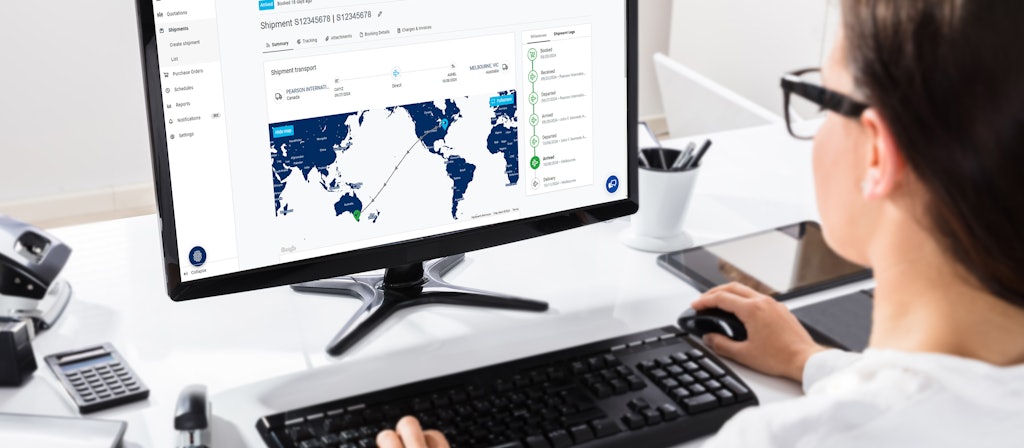
User-Friendly Online Platform
The intuitive online platform Röhlig Realtime makes it easy to request quotes, book shipments, and track your cargo in real-time.
Personalised Support
Dedicated account managers assist you throughout the booking process, ensuring all your requirements are met.
Transparent Pricing
Receive instant quotes with clear pricing, helping you make informed decisions without hidden fees.