Freight shipping from Germany to United States
The contents on this page:
Details about the trade route – trust our expertise
Germany and the USA have been closely intertwined economically for decades. The USA is the most important sales market for German goods: in 2024, bilateral trade in goods (exports + imports) reached around €252.8–252.9 billion, of which approximately €161.4 billion was accounted for by German exports to the USA. This made the USA Germany's most important trading partner in 2024 and, since 2015, consistently the most important single market for German exports.
Scroll down to view detailed information about this trade route or request your individual quote directly.
The transatlantic route has traditionally been a stable corridor for high-quality industrial and consumer goods. Customs duties are generally based on the US Harmonised Tariff Schedule (MFN). At the same time, since the end of the 1990s, several Mutual Recognition Agreements (MRAs) in selected sectors have reduced the testing and certification effort.
Particularly relevant are the MRA on conformity assessment (telecommunications/EMC, etc.) and the mutual recognition of GMP inspections in the pharmaceutical sector, which has been fully effective since 2017.
These cooperation agreements facilitate compliance planning, but do not replace product- or authority-specific US import requirements (e.g. by the FDA or FCC).
Key export goods from Germany to the US (figures: 2023)
- Motor vehicles & parts – strongest item, includes premium cars, SUVs, drive systems and extensive supplier parts. Share of export volume: 21%
- Pharmaceutical products – medicines, vaccines and diagnostic reagents. Share: 17%
- Machinery – capital goods such as machine tools, production equipment and robotics. Share: 19%
- Data processing equipment, electronic and optical products – including medical technology, measurement/testing technology and sensor technology. Share: 8%
- Chemical products (excluding pharmaceuticals) – speciality chemicals, plastics and precursors for US industry. Share: 6%
Important connections on the Germany–US trade route
Sea freight Germany – USA
- Bremerhaven / Hamburg → New York/New Jersey, Norfolk, Charleston (US East Coast) – The transatlantic artery. The majority of vehicles, machinery, equipment, chemical and pharmaceutical products are delivered to the densely populated and industrial East Coast via these routes.
- Bremerhaven / Hamburg → Houston / Savannah (US Gulf & South Atlantic Coast) – Strategic connection to the emerging industrial and logistics centres in the southern United States. Important for machinery and plastics, as well as for the supply of automotive parts to the production plants located there, including those of German car manufacturers.
- Bremerhaven / Hamburg → Los Angeles / Long Beach (US west coast) – The longer route via the Panama Canal, crucial for supplying California, the most populous US state. This route is mainly used to ship high-quality consumer goods, vehicles and electronics.
Typical transit times (port to port)
Transit times range from approximately 10 to 40 days, depending on the destination coast, the service selected and the shipping company's rotation.
- US East Coast: Direct services (e.g. Hamburg → New York) typically take 12–18 days. Premium or express services can reduce this transit time to as little as 10 days.
- US West Coast: Routes to the West Coast (e.g. Bremerhaven → Los Angeles) are often significantly more time-consuming, taking over 30 days.
Air freight Germany – USA
- Frankfurt (FRA) → Chicago (ORD) / New York (JFK) / Atlanta (ATL) – By far the most important air freight hub in Europe. Leading connection for urgent industrial goods, pharmaceuticals, dangerous goods and high-value electronics to the major hubs of the Midwest and East Coast.
- Leipzig/Halle (LEJ) / Cologne-Bonn (CGN) → Cincinnati (CVG) / New York (JFK) – Central hubs for express and e-commerce shipments. Important for time-critical deliveries, spare parts and consumer goods, often in the network of global logistics service providers.
- Munich (MUC) → Los Angeles (LAX) / Chicago (ORD) – Important route for the high-tech and automotive industries in southern Germany, including sensitive electronics, prototypes, automotive components and medical technology.
The standard transit time for air freight (airport-to-airport, including handling) is 3 to 8 days. Urgent shipments via express delivery reach their destination in 1 to 4 days.
The fastest routes are those with high frequency and direct connections, especially Frankfurt–Chicago or Frankfurt–New York. Connections to smaller airports or with transfers take correspondingly longer.
Our Logistics Services at a glance
Germany
United States
General Services
Certifications
Upcoming customer shipments
Sea and Air Freight
| Route | Mode | Transit Time |
|---|---|---|
| Hamburg > New York | Sea | 12-18 days |
| Frankfurt > JFK | Air | 3-8 days |
Your partner for shipping between Germany and the USA
Röhlig Logistics is your specialist for reliable sea and air freight solutions between Germany and the USA. We manage your entire supply chain and ensure smooth customs clearance thanks to our teams of experts in both countries. The complex requirements of US authorities such as the U.S. Customs and Border Protection (CBP), the FDA or the EPA are in safe hands with us.
In addition to standard transport, we also manage demanding project logistics, dangerous goods shipments and temperature-controlled transport. Our service portfolio also includes cross-trades and comprehensive 3PL solutions for storage and distribution.
With modern tracking systems, we offer you end-to-end transparency and, on request, insure your shipments with tailor-made transport insurance. For particularly time-critical freight, our express, charter and on-board courier options are available.
Sea freight on the Germany–USA route
Important seaports on the transatlantic route
Export ports in Germany
- Bremerhaven
One of the largest RoRo and container ports in Europe. The leading gateway for the export of vehicles, machinery and equipment to the USA. - Hamburg
Universal logistics hub with excellent hinterland connections. Crucial for the export of consumer goods, chemical products and groupage freight (LCL) to North America.
Important ports of call in the USA
- New York / New Jersey
The most important gateway to the US East Coast and the densely populated Northeast. Primary port of call for almost all categories of goods from Germany. - Savannah / Charleston
Up-and-coming ports in the south-east, strategically important for supplying the German automotive and industrial plants located there. - Los Angeles / Long Beach
Main port of call on the west coast for supplying California and the western United States, accessible via the Panama Canal.
Examples of sea freight transit times
- FCL: 40' container with machine parts from Bremerhaven to New York: approx. 10–18 days (port-to-port).
- LCL: 1,500 kg of medical technology from Hamburg to Chicago (via the east coast): approx. 18–25 days (port-to-port), door-to-door: 25–35 days.
- FCL: 40' container with consumer goods from Hamburg to Los Angeles: approx. 30–40 days (port-to-port).
Air freight on the Germany–USA route
Central air freight hubs
Departure airports in Germany:
- Frankfurt (FRA)
Europe's largest freight hub and primary hub for high-value, time-sensitive and temperature-sensitive exports such as pharmaceuticals, electronics and dangerous goods. - Leipzig/Halle (LEJ) & Cologne/Bonn (CGN)
Important centres for express and e-commerce shipments, often serving as gateways for global CEP services. - Munich (MUC)
Significant location for the high-tech and automotive industries in southern Germany, with a focus on automotive parts, sensor technology and IT hardware.
Important destination airports in the USA:
- Chicago (ORD)
Central distribution point in the heart of the USA, ideal for the redistribution of industrial goods and machinery throughout the Midwest. - New York (JFK)
Main gateway on the east coast, crucial for the import of consumer goods, pharmaceuticals and valuable goods for the metropolitan region. - Atlanta (ATL) & Dallas (DFW)
Important hubs in the south, ensuring rapid supply to the growing economic areas in the southern states.
Practical example: Air freight Germany – USA
- Shipment: 300 kg of temperature-sensitive pharmaceutical products from Frankfurt (FRA) to Chicago (ORD).
- Transport time: approx. 3–6 days (door-to-door, including customs clearance).
- Typical application: Ideal for time-critical shipments such as valuable industrial goods, urgently needed spare parts or high-quality goods for the medical technology and pharmaceutical industries.
Typical risks on the Germany – USA trade route
- Strict customs and security controls (USA):
Intensive checks by U.S. Customs and Border Protection (CBP) and other authorities (e.g. FDA, EPA) can lead to significant delays and inspections if documentation is incomplete or if there are grounds for suspicion. - Port and terminal utilisation (peak seasons):
Important ports such as Hamburg, Bremerhaven, New York/New Jersey and Los Angeles/Long Beach are operating at full capacity. Especially during the peak season (approx. August–November), this can prolong handling times and lead to bottlenecks. - Labour disputes and strikes (Germany & USA):
In German ports, strikes (organised by ver.di, for example) can paralyse operations. On the east coast of the USA, there is a regular risk of collective bargaining disputes with the ILA union, which can lead to significant disruptions. - Extreme weather in the USA:
The hurricane season (approx. June–November) threatens ports on the east and Gulf coasts and can lead to weeks of disruption. In winter, blizzards can severely affect logistics in the north-east of the USA. - Inland bottlenecks (USA):
Particularly after arrival in the USA, a shortage of truck drivers, overloaded rail networks or a lack of chassis can cause significant delays in the distribution of goods within the country. - Low water levels on the Rhine (Germany):
Prolonged dry periods can lower the Rhine water level to such an extent that inland vessels can only reach seaports with reduced loads. This affects pre-carriage and can severely disrupt supply chains.
Customs and import regulations in the USA
The US market is characterised by a multi-layered and security-oriented regulatory framework. The regulations are monitored and strictly enforced by numerous federal authorities. Errors, incomplete documentation or non-compliance with specific regulatory requirements can result in heavy penalties, costly delays (demurrage and detention), seizures or the return of goods.
Key requirements
- Importer of Record & Customs Bond:
Every importer (Importer of Record) requires a unique identification number (e.g. an EIN for companies) and must provide a customs bond. This bond is a financial guarantee to the customs authority CBP that all customs duties and taxes will be paid. - Regulatory approvals & licences:
For many regulated goods, approvals or compliance with specific programmes are mandatory prior to import. This applies to food, medicines, chemicals, vehicles and certain electronics, among other things. - Product-specific certifications:
Depending on the goods, proof of compliance from various federal agencies (Partner Government Agencies, PGAs) is required. The most important ones are:- FDA (Food and Drug Administration):
For food, medicines, cosmetics and medical technology. - FCC (Federal Communications Commission):
For all devices that emit radio frequencies (e.g. Wi-Fi, Bluetooth). - EPA (Environmental Protection Agency):
For vehicles, engines, chemicals and pesticides. - CPSC (Consumer Product Safety Commission):
For consumer goods, especially toys and children's products.
- FDA (Food and Drug Administration):
- Wood packaging (ISPM-15):
The USA enforces the ISPM-15 standard for wood packaging extremely strictly. Monitoring is carried out by the APHIS (Animal and Plant Health Inspection Service) to prevent the introduction of pests. - Labelling requirements:
For most products, clear indication of the country of origin (e.g. "Made in Germany") is mandatory. Consumer goods are also subject to detailed labelling requirements under the Fair Packaging and Labelling Act (FPLA).
Special regulations
- Food & agricultural products (FDA/USDA):
Imports are subject to the strictest controls. Food businesses must be registered with the FDA, and prior notice is required for many products. - Automobiles & vehicles (EPA/DOT):
Vehicles must comply with the EPA's strict emissions regulations and the Department of Transportation's (DOT) safety standards (FMVSS). Non-compliant vehicles can often only be imported after 25 years. - Chemicals & hazardous materials (EPA/TSCA):
The import of industrial chemicals is regulated by the Toxic Substances Control Act (TSCA). The EPA requires detailed evidence of the composition of the substances. - Alcohol, tobacco, firearms (ATF):
These goods are strictly regulated by the Bureau of Alcohol, Tobacco, Firearms and Explosives (ATF) and require special licences and permits.
Customs duties, fees & charges when trading with the USA
- Customs duty:
The primary customs duty is based on the product's tariff number according to the Harmonised Tariff Schedule of the United States (HTSUS). The rates are usually ad valorem (a percentage of the value of the goods). As there is no comprehensive free trade agreement between the EU and the USA, the standard customs duty rates (MFN customs duty rates) usually apply. - Punitive tariffs:
Depending on the situation, the US may impose punitive tariffs on certain goods from certain countries (e.g. under Section 232 or 301), which are levied in addition to the regular customs duty. - Sales tax:
Unlike a national value added tax (GST/VAT), the US levies a sales tax at the state and local level. This is not payable upon importation, but only when the goods are sold to the end consumer within the US. - Merchandise Processing Fee (MPF):
A fee charged by the CBP customs authority for administrative processing. It is calculated as a percentage of the value of the goods and has a minimum and maximum amount per declaration (currently approx. USD 29-575). - Harbour Maintenance Fee (HMF):
This fee is levied exclusively on sea freight imports and currently amounts to 0.125% of the value of the goods. - Anti-dumping and countervailing duties (AD/CVD):
These very high duties are levied on goods classified as dumped or subsidised in order to protect domestic industry. They are product- and country-specific and can massively increase import costs. - Excise taxes (Federal Excise Tax):
Federal excise taxes are levied on certain goods when they are imported or manufactured in the USA. Examples include alcohol, tobacco, fuels and the "gas guzzler tax" for cars with high fuel consumption.
De minimis threshold / Section 321
A very generous de minimis rule, known as "Section 321", applies to shipments to the USA. Shipments to one person per day with a total value of less than USD 800 can usually be imported duty-free and tax-free using a simplified procedure. Exceptions apply to goods regulated by partner authorities such as the FDA, as well as alcohol and tobacco.
Tips for expedited customs clearance in the USA
- Note Importer Security Filing (ISF 10+2):
For sea freight, it is mandatory to submit ISF data to the US Customs and Border Protection (CBP) early and without errors – at least 24 hours before loading in Germany. Errors result in heavy penalties and guaranteed delays. - Use CTPAT certification:
Become a member of the Customs Trade Partnership Against Terrorism (CTPAT) programme. This status, comparable to AEO in the EU, signals to CBP that your supply chain is secure. This leads to a significantly lower inspection rate, preferential clearance and greater planning security. - Engage a licensed U.S. customs broker:
Working with a licensed U.S. customs agent is essential. These experts ensure the correct classification of goods in the complex U.S. customs tariff (HTSUS), manage the requirements of the numerous partner agencies (PGAs) and protect you from costly mistakes. - Precise and complete documentation:
Ensure that the commercial invoice, packing list and freight documents (bill of lading/air waybill) are absolutely correct and consistent. Unlike in many other countries, commercial invoices in the US must be extremely detailed and contain all the information required by law. - Digital processing via ACE:
All customs declarations and communication with the US authorities must be carried out via the central digital platform Automated Commercial Environment (ACE). The use of this system by your customs agent is the key to efficient and transparent processing.
Your transatlantic shipments in experienced hands – with Röhlig Logistics!
Our customs and logistics experts give you a decisive competitive advantage on the demanding trade route from Germany to the USA. With their in-depth knowledge, our specialists navigate your shipments unerringly through the complex American regulations. We create the conditions for fast and compliant clearance – so that your supply chain across the Atlantic remains reliable and efficient.
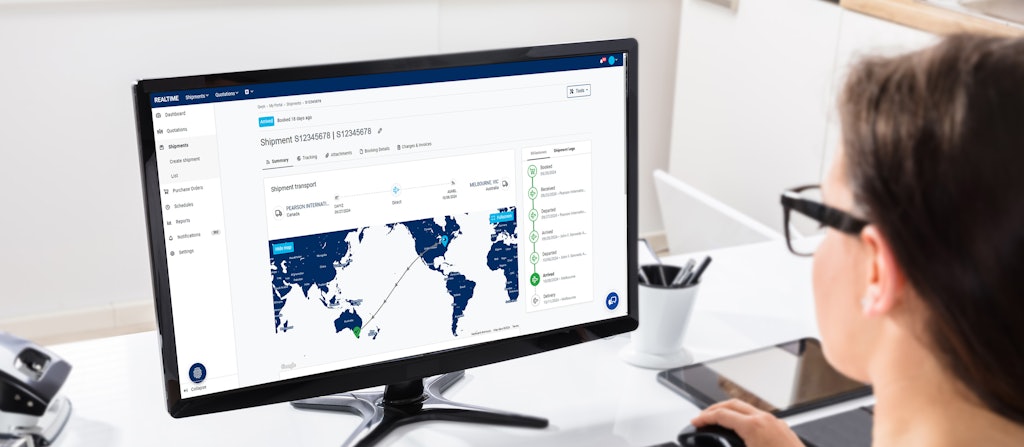
User-Friendly Online Platform
The intuitive online platform Röhlig Realtime makes it easy to request quotes, book shipments, and track your cargo in real-time.
Personalised Support
Dedicated account managers assist you throughout the booking process, ensuring all your requirements are met.
Transparent Pricing
Receive instant quotes with clear pricing, helping you make informed decisions without hidden fees.