Pharma logistics: Challenges, opportunities, future
The logistics of pharmaceutical products involves a particularly high level of responsibility. The proper transport of pharmaceutical products ensures their effectiveness. Since life and limb sometimes depend on the impeccable condition of the medication, strict quality assurance standards apply. National and international regulations along the supply chain must be met.

Pharma logistics: Secure supply chains for medications
When it comes to the condition of the freight, maintaining the required temperature level is often the main focus through the entire supply chain. The time factor also plays an important role. The supply chain in the field of pharmaceutical logistics must function reliably and on time. But what exactly is important? What are the special challenges of pharmaceutical logistics? What future developments are emerging? Find out more in our blog post:
Requirements and challenges of pharmaceutical logistics
Strict temperature control and compliance
Many drugs require a specific temperature. If this is exceeded or not reached, their effectiveness can be compromised. Some medications are rather robust, while others are highly sensitive (e.g. monoclonal antibodies). When it comes to vaccines, blood plasma or cancer drugs, the importance of a reliable, seamless cold chain for medical transport is obvious.
High economic damage due to preservation problems
In addition to patient health, economic aspects also play a role. According to an estimate by the IQVIA Institute for Human Data Science from 2019, the biopharmaceutical industry loses almost 35 billion dollars annually due to problems with temperature-controlled transport.
Temperature requirements down to -196 °C
Temperatures required within the cold chain can vary greatly. A lot of pharmaceuticals simply require CRT compliance (controlled room temperature). Insulin needs to be kept at a constant temperature of 2-8°C; freezing and heat both destroy its effectiveness. Blood plasma is transported at -30°C or lower, and some vaccines require temperatures as low as -70°C – and this over hundreds of kilometres.
When it comes to DNA samples or certain biopharmaceuticals, special transport containers with liquid nitrogen are used, which enable cryogenic temperatures as low as -196 °C. It goes without saying that such ultra-cold supply chains require highly specialised logistics solutions.
Hot climates as a special challenge
Maintaining the cold chain in hot climates is a particularly big challenge for pharmaceutical logistics companies. Here it is not ‘only’ a pure outside temperature of 40 °C, but also the fact that containers and transport vehicles heat up more and more due to the heat absorption of the metal components. In other words: the challenge does not increase linearly with rising temperature, but exponentially. For this reason, special logistics solutions are used, from white reflective coatings for containers or transporters with insulating interior panelling, to refrigerated containers with compressor cooling, to insulating freight blankets and particularly powerful cooling technology.
Central components for a closed cold chain:
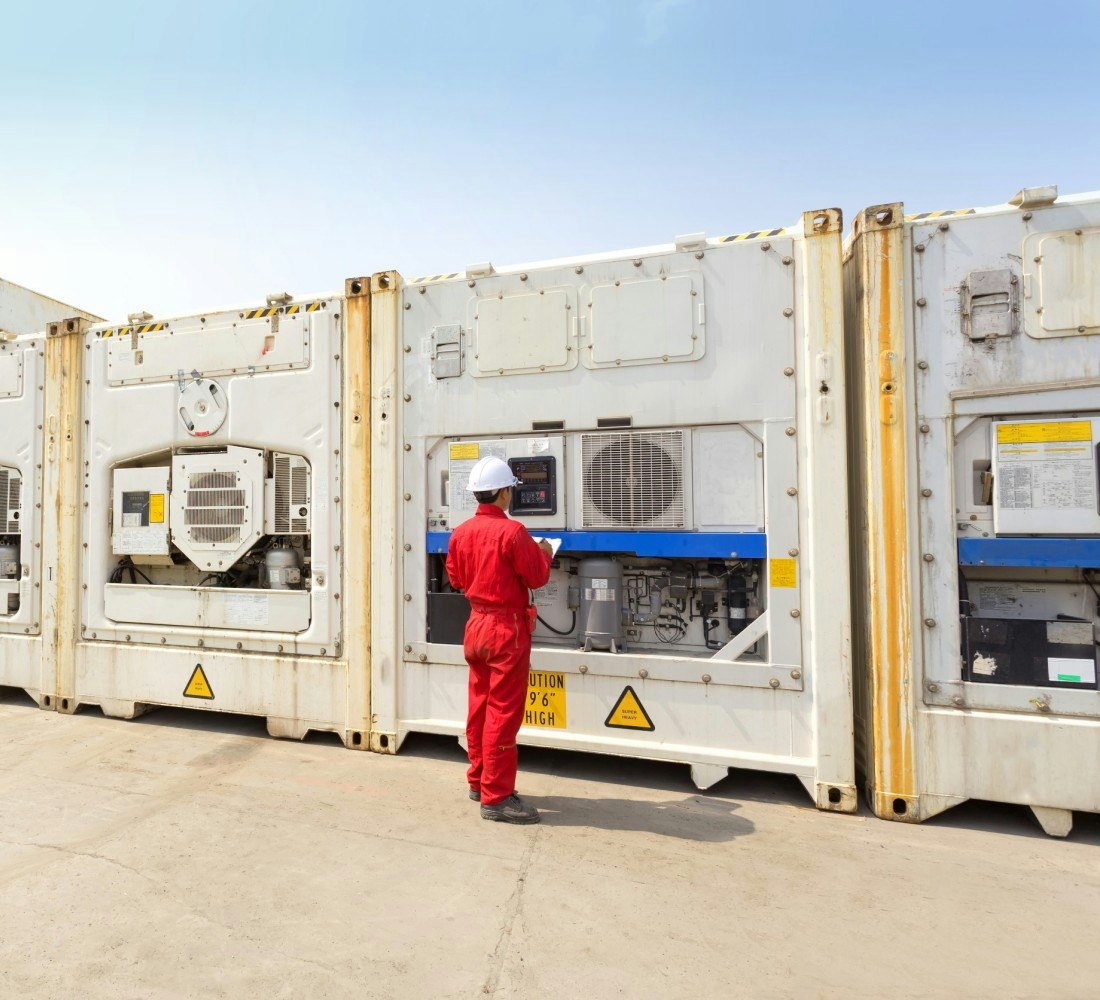
Warehouses with GDP certification, efficient cooling technology and different temperature zones.
Suitable transport containers (e.g. GDP-compliant refrigerated containers or reefers). In many cases, special packaging is also required in addition to active cooling solutions, such as airline containers (from various manufacturers), truck trailers, and reefer containers for ocean freight.
Vehicles with high-performance temperature control systems
Seamless temperature tracking & documentation
Incidentally, even if temperature control is the main focus, other climatic factors such as suitable humidity often play an important role. The brightness and general cleanliness of a warehouse are also relevant. UV light can affect medications, and a hygienically flawless warehouse reduces the risk of contamination (dust, mould, microorganisms, pests, moisture, etc.).
Strict regulations
Logistics in the healthcare sector is justifiably subject to particularly stringent legal requirements – after all, it is often a matter of life and death! As a logistics company, you have to comply with national and international regulations and laws.
Overview of important regulations for pharmaceutical logistics:
National level: Every country has its own standards for medicinal products. For example, pharmaceutical logistics in Germany is governed by the German Medicinal Products Act (AMG), in the USA by the Code of Federal Regulations (CFR 21), China uses ‘Good Supply Practice’ (GSP, similar to the GDP described below), and Japan has the strict Pharmaceutical and Medical Device Act (PMDA).
Good Distribution Practice (GDP): This internationally recognised standard regulates the storage and transport of pharmaceutical products. Compliance with the associated guidelines is required by law. Certification according to GDP is not mandatory, but from a customer perspective, it is an important proof of the required competence.
The core aspects of an exemplary GDP process are quality assurance, temperature control, documentation and traceability, training and clear responsibilities, as well as a well-defined risk management system.
GDP can be considered the most important standard for pharmaceutical logistics worldwide. It specialises in pharmaceuticals and the active ingredients required for their production. At the same time, it covers all relevant areas of the supply chain. Many national standards are derived from or based on GDP (e.g. USA, Canada and China). The Guidelines on Good Distribution Practice of medicinal products for human use (informally ‘EU-GDP’) are binding for all member states of the Union.
The World Health Organization (WHO) has played a major role in developing the guidelines and standards of GDP and supports the global implementation and harmonisation of GDP guidelines and standards.
Röhlig already* operates 15 GDP WeCare-certified locations worldwide, thus demonstrating compliance with the highest security standards. A further 20 locations are currently in the certification process to obtain a GDP WeCare certificate by 2026.
Other standards that play a role include the IATA rules for air transport, or the indirect influence of ISO standards, from the general ISO 9001 standard for quality management systems to ISO 13485 specifically for medical devices and ISO 22301, which deals with risk management to ensure the supply chain.
The sum of the different requirements represents a challenge for the pharmaceutical logistics company. However, many national and global standards are aligned to create a unified basis. The regulatory authorities are aware that strict quality assurance requirements must nevertheless be implemented efficiently. The GDP standard described above is an important factor here in setting the pace for harmonising processes within the global pharmaceutical supply chain.
Reliable and punctual deliveries
Medications must not only survive transport unscathed, but also arrive at the recipient's premises on time. In the worst case, delays can endanger the life of patients who depend on essential medicines. GDP requires pre-planned and validated transport routes and methods, and GDP-compliant partners.
The customs clearance process must also be designed to be interruption-free, with the necessary documents provided. Knowledge of local conditions and processes, which can vary greatly across the globe, is an advantage. Experienced teams in local offices are helpful here.
The entire supply chain must be transparent and traceable. In the event of acute deviations, it must be possible to take measures to mitigate them. Furthermore, these deviations must be documented and evaluated.
At the same time, global supply chains are under more pressure than ever. As a pharmaceutical logistics provider, it is therefore essential to have a sophisticated risk management concept ready. Proactive risk assessment is also essential, for example with regard to strikes, traffic disruptions or natural disasters.
Since many shocks to the supply chain are unforeseeable, it is also advantageous for the logistics company to be fundamentally flexible and able to act quickly!
Traceability and security
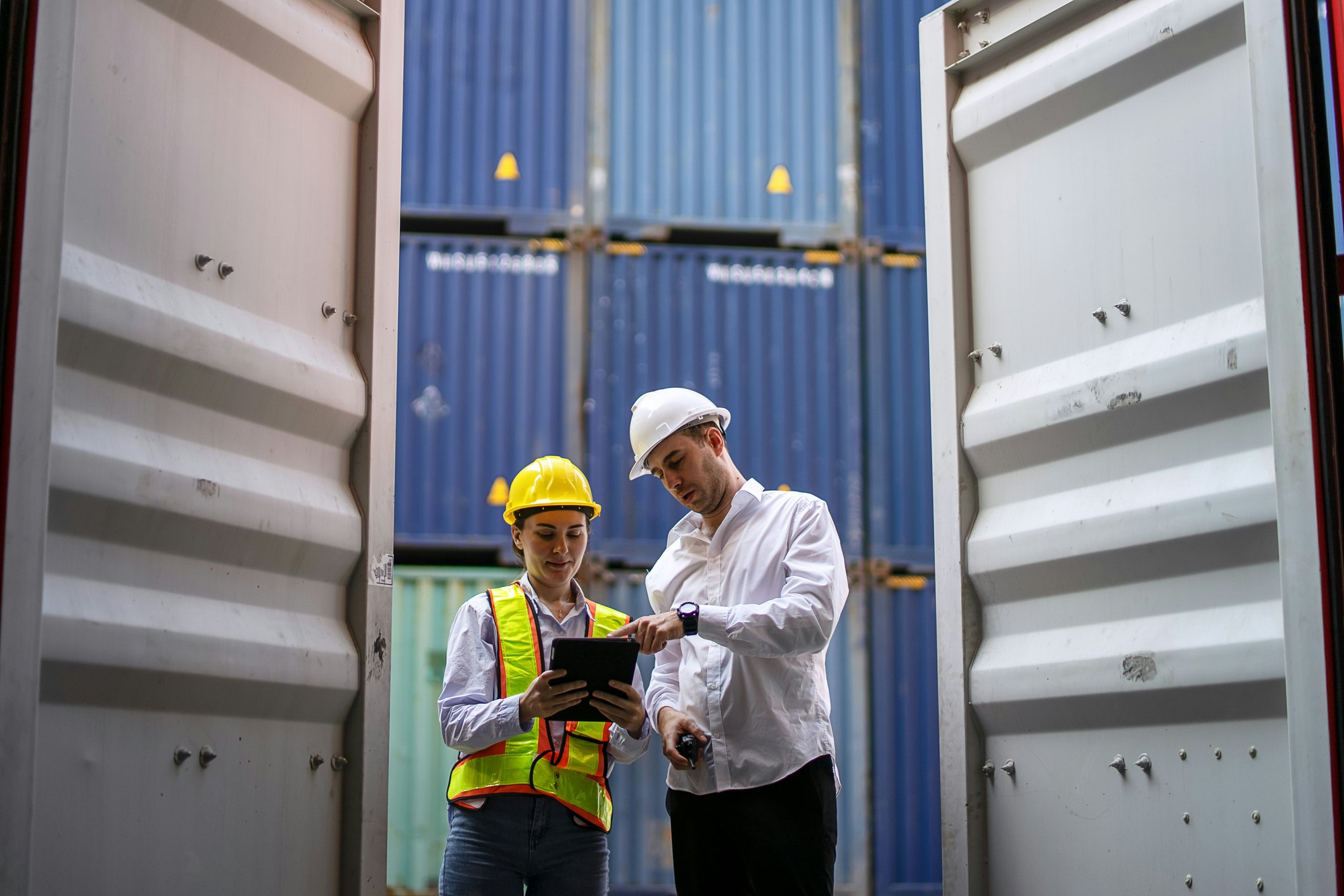
Another important issue is the prevention of and protection against counterfeit medicines. Therefore, the transport of medical products must be fully traceable. Counterfeit medicines pose a significant health risk. For this reason, the European Union, for example, is consistently implementing measures to combat them.
Means of transport such as containers must be protected against tampering or theft. The sometimes very high monetary value of pharmaceuticals makes them an attractive target for organised crime.
Certain chemicals used in the manufacture of pharmaceuticals, in turn, may constitute hazardous goods and are subject to the regulations of the International Dangerous Goods Code (IMDG).
Digital solutions and modern tracking technology
It is now possible to seamlessly track a delivery from door to door. Modern tracking technology allows customers to access the location and condition of their medical freight around the clock. At the same time, it is possible to provide comprehensive documentation of the delivery process, including environmental data such as temperature, humidity, brightness or even vibrations.
Röhlig offers with its TIVE Trackers a powerful solution that can be implemented in no time. At the same time, the TIVE trackers can be reused. The market-leading technology sends accurate, reliable 360-degree data on the status of the shipment from anywhere in the world, and the trackers themselves are light, small and handy.
Control tower approach for transparent supply chain management
Digital solutions in the logistics industry today combine large data streams. To generate added value from this, several factors need to interact:
Accurate collection of all relevant data
Fast computer-aided evaluation of the information based on defined performance parameters (great potential for artificial intelligence!)
Use of a digital interface that presents relevant information in a comprehensible and user-friendly way
Only when all three factors are in place can real added value be achieved from the digital data streams – insufficient data collection or a lack of analysis make the entire system ineffective. Even a perfect data basis only realises its full potential when the insights gained are made accessible via an intuitive and practice-oriented user interface.
Röhlig uses its highly developed digital control tower to provide complete transparency and visibility across the entire supply chain. All the information comes together in a single interface, providing real-time access to the location and condition of the goods in transit. High-performance track and trace devices and a powerful control tower platform allow quick, user-friendly access to the desired information. Röhlig's control tower solutions can be tailored to the specific needs of the customer.
Future developments in pharmaceutical logistics
The challenges and hurdles to maintaining reliable supply chains have increased significantly in the recent past. As a result, medical logistics service providers are continually developing and improving their technology, equipment and processes. The following trends and developments will (continue to) play an increasingly important role:
Disruptions to the supply chain caused by natural disasters, extreme weather events, geopolitical conflicts or even the return to more trade barriers and protectionism will continue to demand the utmost effort from the logistics industry. In particular, the healthcare sector is and will remain dependent on reliable and resilient supply chains – as well as on logistics companies that are constantly developing their services in order to meet the growing challenges.
Dynamic developments in terms of supply routes and production locations
One key factor is the distance a pharmaceutical consignment has to travel, in other words, where the required goods are produced and where they are needed. From a European perspective, it makes sense to ensure short distances, at least for vital medicines, by locating production sites in Europe. The mass production of medicines, such as generics, takes place primarily in India and China. No change is expected here in the short term, but in the long term, political measures and strategic realignments could lead to a broader geographical distribution of production.
In particular, the COVID-19 pandemic had clearly revealed problematic dependencies of the EU on non-EU countries. Since then, other drug shortages have also occurred to an extent previously unknown. The shortage of asthma medication, paediatric drugs and antibiotics are just three examples of many that are not only playing a role in Germany.
The global increase in weather phenomena with extreme heat is increasing the demand for temperature-sensitive medical transport.
Consistently visible supply chains including complete inventory monitoring to detect shortages of medicines in good time. At the national level – for example in Germany – the aim is to implement early warning systems to identify impending supply bottlenecks in good time. AI-supported forecasts can prove helpful here. At the same time, existing supply chains are being tested for resilience with stress tests, so that alternative solutions can be prepared for fragile supply chains.
Digitalisation and automation are increasingly being used to establish cost-efficient and, at the same time, more customised processes and structures for end-to-end supply chains. At the same time, they provide the necessary transparency across the entire supply chain to meet the strict regulations for pharmaceutical logistics. A willingness to embrace new technologies and a spirit of innovation are key here.
Smaller batches, personalised medication, direct-to-patient delivery: On the one hand, the prospect of producing increasingly personalised medication, based on the patient's individual genetic profile, for example, is on the horizon. Designing the logistics of smaller quantities on demand to be both efficient and economical is a major challenge.
Direct-to-patient logistics is seen as a transformative trend in clinical research. A common bottleneck in the development of new drugs is the recruitment and retention of study participants. Direct-to-patient is designed to make this easier. The aim is to reduce dependence on central medical facilities. It can also make it easier to send in medical test samples.
What is the difference between pharmaceutical logistics and medical technology logistics?

Logistics for pharmaceutical products primarily involves the transport of medications, biopharmaceuticals, vaccines, diagnostic products or laboratory samples. It also includes raw materials for the production of pharmaceuticals.
Logistics for medical technology takes care of the transport of medical devices, instruments and consumables. Prostheses and implants are also part of this logistics sector.
While pharmaceutical logistics has very strict temperature requirements, medical technology logistics focuses on the correct handling of often sensitive, bulky and expensive medical devices. Despite their different focuses and requirements, both disciplines share the same maximum demand for proper transport in order to avoid putting the health of the treated patients at risk.
We at Röhlig are experts in both areas of logistics. Our Healthcare and Life Science division is responsible for medical logistics, organising both the transport of pharmaceuticals and the logistics for medical technology.
Summary: Core competencies for pharmaceutical logistics
Several conclusions can be drawn from the above considerations with regard to the characteristics of an exemplary pharmaceutical logistics provider:
Familiarity with the applicable national and international regulations at an expert level
Ideally, local offices that are familiar with local standards
GDP certification or ongoing certification processes as proof of commitment to the highest safety and quality standards
Perfectly coordinated cold chain logistics for storage and transport
Specialised, high-performance transport containers with suitable cooling technology down to cryogenic temperatures of -196 °C
Seamless real-time temperature monitoring to immediately detect fluctuations and risks.
Many years of logistics experience, effective risk management and a strong network to respond quickly and flexibly to unforeseen challenges
Use of powerful track and trace technology for transparent, traceable end-to-end supply chains
User-friendly interfaces (e.g. Röhlig's customised control towers) for customers to quickly check the location and status of their delivery
Dynamism and innovative strength to ensure continuous development and to be able to provide an economical, resilient and sustainable supply chain despite demanding regulations
At Röhlig, we relish the challenges that pharmaceutical logistics brings. The field of medical logistics demands logistics services at the highest level and constant further development – an incentive for our pursuit of excellent solutions for our partners. Our strengths in the field of digitalisation pay off particularly in pharmaceutical logistics. Our network of GDP WeCare-certified locations is also a success factor for reliable, compliant pharmaceutical logistics.