Freight shipping from India to United Kingdom
The contents on this page:
Details about the trade route – trust our expertise
UK is one of the largest investors in India – since 2000, British direct investment has totalled over USD 35 billion. Around 971 Indian companies are present in the United Kingdom, employing more than 118,000 people.
The partnership between the two countries is characterised by strong mutual investment. For Indian companies, the British market offers attractive access to Europe: Indian companies have established a strong presence in the UK, particularly in the IT services, pharmaceutical, automotive and manufacturing industries.
Conversely, British companies are primarily active in India in the financial services, infrastructure and renewable energy segments – areas that directly support India's growth-oriented agenda.
Indian exporters will benefit particularly strongly from the Free Trade Agreement (FTA) signed on 6 May 2025: the United Kingdom is removing almost all tariffs on imports from India, making Indian goods such as textiles, cosmetics, food and beverages significantly more competitive.
For India, the agreement thus opens up the opportunity to further expand its role as a preferred supplier to the British market while diversifying its export base.
Key exports from India to the UK
- Mineral fuels and oils
Mainly refined petroleum products; these accounted for the largest share of Indian goods exports to the UK in 2023, at around 15.2%. - Machinery and electrical equipment
Telecommunications equipment is particularly important here; this category accounted for around 10.1% of exports in 2023. - Precious stones & jewellery
Includes diamonds and other jewellery; this sector accounted for approximately 7.4% of total export volume in 2023. - Pharmaceutical products
Medicines and various pharmaceutical products accounted for around 6.3% of total export value in 2023.
Popular India–UK trade routes
Sea freight India – UK
- Nhava Sheva (Mumbai)
Felixstowe – most important direct connection for container freight - Mundra – London Gateway
Alternative route with high volume, focusing on bulk goods and industrial goods - Chennai – Felixstowe
Important connection for exports from southern India, especially from the automotive and engineering industries - Tuticorin – Felixstowe
Relevant route for southern India (focus: consolidated containers and consumer goods)
Air freight India – UK
- Delhi (DEL) – London Heathrow (LHR)
Most important air freight connection between India and the United Kingdom - Mumbai (BOM) – Birmingham (BHX)
Busy connection for fashion, electronics and pharmaceuticals - Bangalore (BLR) – London Heathrow (LHR)
Particularly relevant for the export of technology and IT components from the South Indian high-tech centre - Hyderabad (HYD) – London Heathrow (LHR)
Specialises in temperature-controlled pharmaceutical freight, biotech and medical goods
Our Logistics Services at a glance
India
United Kingdom
General Services
Certifications
Röhlig logistics solutions for India–UK transport
The connection between India and the United Kingdom covers long distances and two very different markets. To ensure that your supply chain functions reliably, you need a partner who knows both sides inside out. Röhlig has this experience: with our own locations in India and a strong network in the UK, we accompany your shipments along the entire route.
Our teams of experts are thoroughly familiar with the respective conditions – from export formalities in India to import and compliance requirements in the UK. This enables us to develop tailor-made transport solutions that deliver your goods safely, efficiently and in compliance with regulations.
Our services for air and sea freight
- Door-to-door services
Complete transport chain including pre- and post-carriage - Cross-trade transport
International transport between third countries - Customs clearance & advice on import licences/certificates
Including BIS, FSSAI, CDSCO, CCC, GACC depending on the country - Transport insurance & claims support
Coverage in accordance with ICC standards, support in the event of damage - Digital solutions
Track & trace, EDI systems, proactive communication - 3PL warehousing & distribution
Global contract logistics, transhipment, last mile
Sea transport
For larger quantities of goods, sea freight between India and the United Kingdom is the most economical transport option. Efficient ports such as Nhava Sheva, Mundra, Chennai and Tuticorin offer regular departures to Felixstowe and London Gateway, the UK's main seaports.
When the classic main route through the Suez Canal and the Mediterranean is available, typical transit times are 26 to 30 days (port to port). If the detour via Cape Horn is necessary, transit times are extended by 10-14 days.
Important seaports on the India–UK trade lane
India
- Nhava Sheva (Mumbai)
India's largest container port and central hub for goods traffic on the west coast - Mundra
Deep-water port with very high handling capacity, important for industrial and bulk goods - Chennai
Leading port in southern India, specialising in automotive, machinery and consumer goods exports
United Kingdom
- Felixstowe
The UK's most important container port with numerous direct connections to India and Asia - London Gateway
Modern deep-water port designed for large container ships and with excellent hinterland connections - Southampton
Major export port, especially for machinery, vehicles and project cargo
Röhlig services for your sea freight from India to the UK
- Sea freight (FCL & LCL)
Full container loads or groupage, including expedited LCL services - Ro/Ro shipments
Roll-on/roll-off for vehicles, machinery and project cargo - Project logistics
Special solutions for oversized or heavy transports - Freight consolidation (sea LCL)
Consolidated containers for smaller shipment volumes - Temperature-controlled transport (reefer containers)
Constant cooling for food, pharmaceuticals, chemicals
Air transport from India to the United Kingdom
For time-critical, high-value or temperature-sensitive goods, air freight between India and the United Kingdom is the fastest transport option. There are daily direct connections from major Indian airports such as Delhi, Mumbai and Bangalore to London Heathrow, East Midlands and Manchester. Typical transit times are 5 to 8 days (door-to-door), with express shipments delivered within 2 to 4 days.
Key airports on the India–UK trade lane
India
- Delhi (DEL)
India's largest air freight hub, important for northern India and pharmaceutical shipments - Mumbai (BOM)
Second largest cargo airport in the country, strong in the pharmaceutical, electronics and fashion sectors - Bangalore (BLR)
Specialised location for technology and temperature-sensitive transport, especially for the IT and pharmaceutical sectors
United Kingdom
- London Heathrow (LHR)
The UK's most important airport for international air freight, with central connections to India - East Midlands (EMA)
Express and e-commerce hub with short turnaround times and direct CEP connections - Manchester (MAN)
Important air freight centre in the north of England, heavily used for industrial and machinery exports
Example of an air freight shipment
- Shipment: 150 kg of pharmaceutical products from Mumbai (BOM) to London Heathrow (LHR)
- Transit time: 5–8 days (door-to-door), 2–4 days for express shipments
- Typical use: When every hour counts – e.g. for urgently needed medicines, temperature-controlled pharmaceutical shipments or industrial production stoppages
Air freight-specific services from Röhlig
- Air freight – fast transport for urgent, high-value or sensitive goods, including express & charter
- Onboard courier services – personal accompaniment of time-critical shipments
- Freight consolidation (air) – consolidated shipments in the air freight sector
- Temperature-controlled transport (active containers, Thermo-ULDs) – for pharmaceuticals, biotech, high-tech
Customs and import regulations in the United Kingdom
Import restrictions
- Weapons and ammunition:
Firearms, explosives and related components require an import licence from the Home Office. - Drugs and chemicals:
Narcotics and psychotropic substances (covered by the Narcotics Act) are restricted. Dual-use chemicals (e.g. for weapons manufacturing) require a special licence. - Animals and animal products:
Live animals, meat, dairy products and other products are subject to strict controls in accordance with DEFRA/APHA regulations. - Plants and plant products:
Certain seeds, fruits, vegetables and plant materials require a phytosanitary certificate and may be subject to quarantine regulations. - Cultural goods and antiques:
Items that are more than 50 years old or have cultural value may require an export licence from the country of origin and an import licence for the United Kingdom. - Endangered species:
Subject to CITES regulations – including ivory, exotic leathers and certain woods. - Steel and aluminium:
Some categories are subject to import controls or licensing regulations. - Textiles and clothing:
A licence is required for certain countries of origin, particularly for imports subject to quotas. - Food and beverages:
The import of food (especially of animal origin) is subject to hygiene, safety and labelling controls. - Ozone-depleting substances and fluorinated gases:
Subject to environmental regulations; require registration and authorisation. - Precursors for explosives and drug manufacture:
Require special authorisations. - Counterfeit and pirated goods:
Prohibited and subject to seizure by customs.
Certain products are subject to special regulations requiring companies to obtain licences and certificates before importing them into the United Kingdom. By law, a country must apply for market access authorisation in order to export high-risk sanitary and phytosanitary (SPS) goods. Unless the country is authorised for these products, a company cannot export them to the UK.
De minimis values for imports into the UK
The low-value imports (or de minimis) scheme allows companies to send parcels containing goods worth less than £135 to customers in the UK without paying customs duty on these goods.
VAT is still payable, and platforms are required to collect it and pay it directly to HMRC for companies based outside the UK.
Trade Lane India – UK: Customs duties and taxes
- Import duty:
Applies to goods valued at over £135 (including cost, insurance and freight – CIF). The rate depends on the commodity code of the item and its country of origin. - Value Added Tax:
VAT applies to all imported goods, regardless of their value. Calculated on the basis of: goods value (CIF), import duty (if applicable), any additional costs (e.g. insurance and shipping). Standard VAT rate in the United Kingdom: 20% Excise Duty - Additional tax:
Levied on certain goods, e.g. alcohol, tobacco, fuel. Levied in addition to import duty and VAT. - Anti-dumping duty:
Anti-dumping duties are levied on imported goods whose prices are deliberately lower than the prices of similar products in the United Kingdom.
Support for customs clearance in the UK by Röhlig
- Pre-clearance during transport:
Röhlig's experts can prepare and submit customs documents while your shipment is still in transit, so that formalities are completed before arrival. This means your goods can be cleared immediately upon arrival without additional waiting times. - Country-specific expertise:
With in-depth knowledge of both Indian export regulations and UK import regulations, Röhlig avoids common delays by ensuring correct tariff classification, the right import licences or certificates (if required) and full compliance with standards and quotas. - Expert customs advice:
Our specialists proactively look for pitfalls – such as missing documents or incorrect classifications – and advise you on the following topics: optimal commodity codes, required licences or health certificates, and reducing unexpected customs duties or penalties. - Global on-site support:
Röhlig offers customs clearance services at all UK ports and airports through its local offices. This means you receive support no matter where your shipment arrives. - Smooth coordination and communication:
We provide you with a single point of contact throughout the process who tracks the shipment status, liaises with the UK customs authority HMRC and ensures that your goods meet all compliance requirements prior to delivery.
Environmental and safety regulations
- Minimisation: The weight and volume of packaging must be limited to the minimum necessary for safety, hygiene and product acceptance.
- Limits for hazardous substances: The packaging must not contain more than 100 ppm of lead, mercury, cadmium and hexavalent chromium in total.
- Reusability and recyclability: Packaging must meet at least one of the following requirements:
- Reusable
- Recyclable (mechanical, material-related)
- Recoverable by incineration (minimum calorific value: > 5 MJ/kg)
- Compostable (biodegradable under industrial conditions)
- Transport of dangerous goods: Must comply with ADR (road), RID (rail) and IMDG (sea) regulations. Dangerous goods must be clearly labelled, securely packaged and accompanied by the relevant documentation in accordance with UN classification.
Necessary declarations of conformity for import into the UK
The UKCA marking is mandatory for most products (e.g. electronics, machinery, toys, PPE, gas appliances) placed on the UK market. Exporters must draw up a UK Declaration of Conformity (DoC) certifying compliance with the relevant UK regulations and safety standards and listing the applicable legislation and conformity assessment procedures.
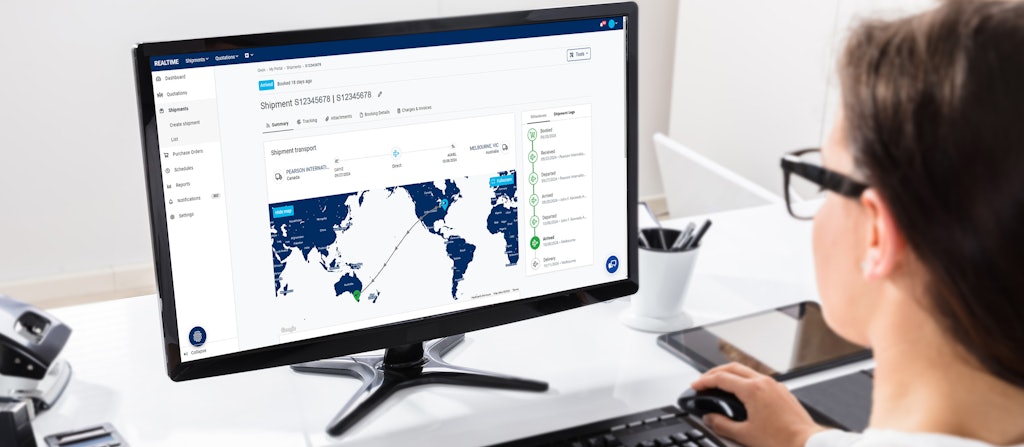
User-Friendly Online Platform
The intuitive online platform Röhlig Realtime makes it easy to request quotes, book shipments, and track your cargo in real-time.
Personalised Support
Dedicated account managers assist you throughout the booking process, ensuring all your requirements are met.
Transparent Pricing
Receive instant quotes with clear pricing, helping you make informed decisions without hidden fees.