Freight shipping from India to Germany
The contents on this page:
Trade lane details – trust our expertise
This trade lane connects major Indian manufacturing clusters with one of Europe’s most important consumer and industrial markets. Western ports such as Nhava Sheva/JNPA and Mundra are major departure points for containerised freight to Northern Europe. On the eastern and southern coasts, Chennai, Kamarajar/Ennore, Krishnapatnam and Cochin serve regional industrial centres. Mumbai, Delhi, Bengaluru and Chennai are important airfreight gateways for time-critical cargo.
Careful planning is essential: inland legs in India can be long, monsoon rainfall may disrupt infrastructure, and the security situation in the Red Sea may lead to short-notice changes in sea routing. Transit times and routings should therefore always be regarded as indicative and checked against the current schedule before booking.
Future Outlook for Trade Between India and Germany
Negotiations on an EU–India free trade agreement concluded on 27 January 2026. Before the agreement can apply, however, the stipulated legal review, signature and conclusion procedures must be completed. Until it actually enters into force, the customs and origin rules currently in effect continue to apply.
Over the longer term, the proposed agreement could substantially improve market access. The published negotiated text envisages eliminating or reducing a large share of tariffs. For an individual shipment, however, the commodity code, origin requirements, transitional periods and legal status at the time of import remain decisive.
Key Export Goods from India to Germany
- Pharmaceutical products and active ingredients: Depending on the product, temperature control, GDP-compliant processes, secure packaging and traceable monitoring may be essential.
- Chemical products: REACH, CLP and dangerous goods requirements must be assessed for the specific chemical or chemical-containing product.
- Electronics and high-tech components: Protection against humidity, shock and theft, together with an accurate review of the applicable EU product legislation, is particularly important.
- Vehicle parts and machinery components: Production-related supply concepts require dependable lead times, precise goods descriptions and coordinated spare-parts or just-in-time planning.
- Textiles, clothing and leather goods: In addition to competitive sea-freight rates, moisture protection, labelling, origin and product-specific market requirements play an important role.
Our Logistics Services at a glance
India
Germany
General Services
Certifications
Upcoming customer shipments
Röhlig: Strong Logistics Services for the India–Germany Trade Lane

Whether you require sea or air freight, Röhlig Logistics develops a suitable door-to-door solution between India and Germany. Our teams coordinate pre-carriage, main carriage, on-carriage, document management and customs clearance while keeping the requirements of your cargo in focus.
Appropriate monitoring and security solutions can be planned for pharmaceutical, temperature-controlled, high-value or shock-sensitive consignments. Digital shipment tracking provides transparency throughout the transport chain. In carbon reporting, logistics emissions must be distinguished from the product-specific embedded emissions relevant under CBAM.
Sea Freight from India to Germany
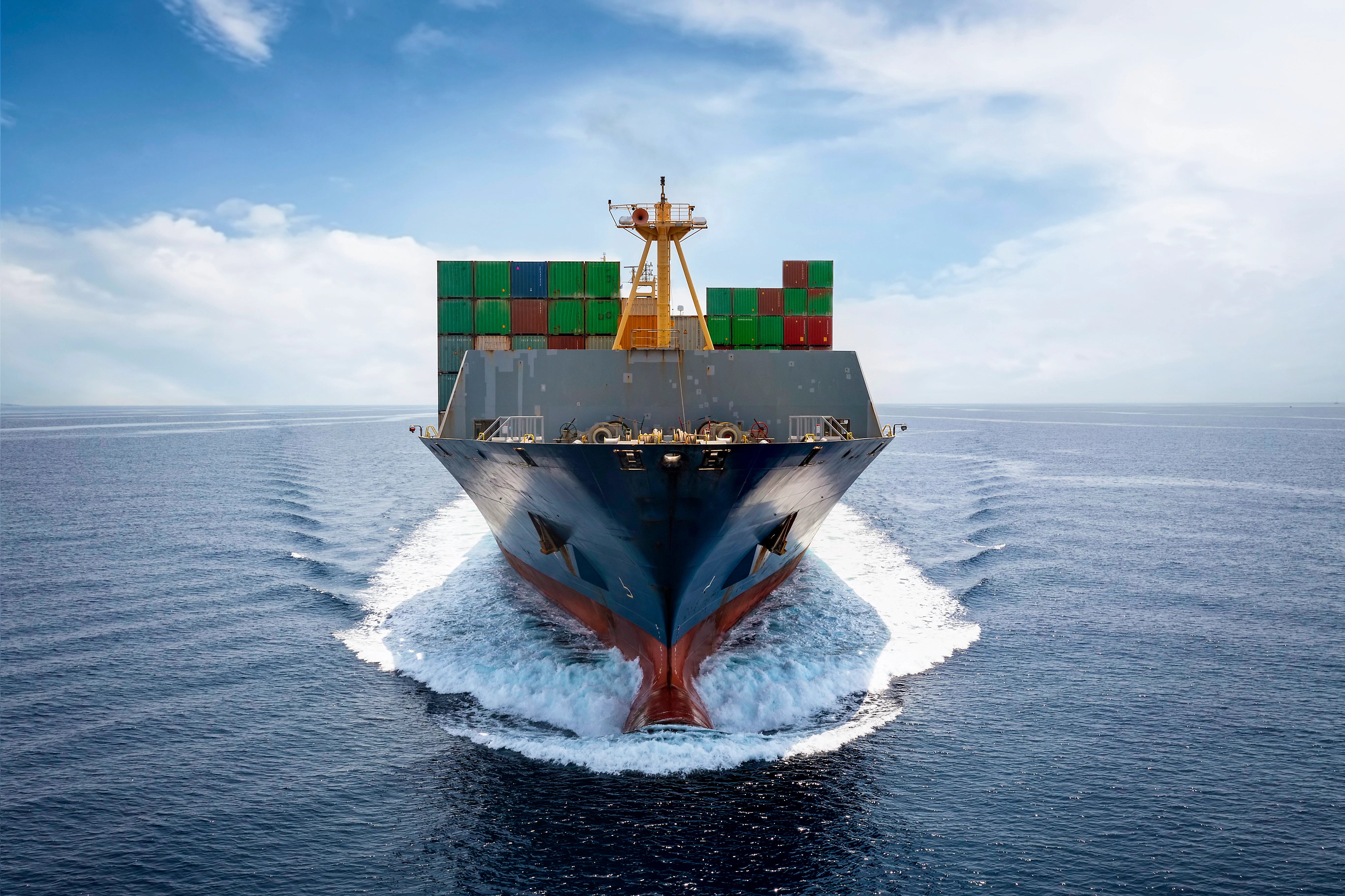
Key Seaports on the India–Germany Trade Lane
- Nhava Sheva/JNPA
A major container gateway for Mumbai and western India. - Mundra
An important private container and industrial port on India’s west coast. - Chennai and Kamarajar/Ennore
Key ports for southern India, including automotive and industrial cargo. - Krishnapatnam and Cochin
Important regional alternatives for southern and south-western India. - Hamburg
Germany’s largest universal port and an important gateway for India traffic; direct container traffic with India totalled approximately 290,000 TEU in 2025. - Bremerhaven and Wilhelmshaven
Further important German North Sea gateways for containers, vehicles, project cargo and industrial freight.
Examples of Sea Freight Transit Times
- Shipment: one 40-foot container of machinery components from Nhava Sheva/JNPA to Hamburg.
- Transit time: depending on the service and routing, often approximately 22 to 30 days port to port; LCL and transhipment require more time.
- Key considerations: current carrier routing, pre-carriage to port, complete export documentation, appropriate moisture protection and sufficient contingency time.
Popular India–Germany Sea Freight Trade Routes
| Route | Key Facts |
|---|---|
| Nhava Sheva/JNPA or Mundra → Hamburg, Bremerhaven or Wilhelmshaven | Key west-coast routes for containerised, industrial and consumer goods. |
| Chennai, Kamarajar/Ennore or Krishnapatnam → German North Sea ports | Important links for vehicle parts, machinery, electronics, textiles and manufacturing clusters in southern and eastern India. |
| Cochin, Hazira and other west-coast ports → German North Sea ports: | Alternative departure points for regional industrial, chemical, pharmaceutical and temperature-controlled shipments. |
Under normal schedule conditions, port-to-port transit times are often around 22 to 35 days. LCL shipments usually take longer because of consolidation and deconsolidation. Diversion around the Cape of Good Hope can add time; the actual impact depends on the port of departure, service, transhipment and shipping line.
Air Freight from India to Germany

Key Airports on the India–Germany Trade Lane
- Mumbai (BOM) and Delhi (DEL)
Leading international gateways with passenger and freighter connections. - Bengaluru (BLR), Chennai (MAA) and Hyderabad (HYD)
Important locations for technology, pharmaceutical, automotive and industrial shipments. - Frankfurt (FRA)
Germany’s largest air-cargo gateway and a central access point to the European hinterland. - Munich (MUC) and Leipzig/Halle (LEJ)
Important alternatives for southern Germany and for express, charter and freighter services respectively.
Example of an Air Freight Shipment
- Shipment: 150 kilograms of temperature-controlled pharmaceutical goods from Hyderabad (HYD) to Frankfurt (FRA).
- Transit time: depending on the connection, approximately one to three days airport to airport and generally three to six days door to door.
- Key considerations: validated packaging, temperature limits, complete product and customs documentation, confirmed capacity and coordinated handovers.
Popular India–Germany Air Freight Trade Routes
| Route | Key Facts |
|---|---|
| Mumbai (BOM) or Delhi (DEL) → Frankfurt (FRA) | Important routes for time-critical industrial, pharmaceutical and high-value goods. |
| Bengaluru (BLR) or Chennai (MAA) → Frankfurt (FRA) or Munich (MUC) | Important connections for technology, automotive and industrial shipments. |
| Other German gateways | Leipzig/Halle (LEJ), Hamburg (HAM) and Stuttgart (STR) may be suitable alternatives depending on the carrier, routing and final destination. |
Airport-to-airport transit is often one to three days on faster connections. Standard and economy solutions involving transfers, consolidation or longer ground times generally take three to seven days. Door-to-door lead times also depend on collection, export clearance, capacity, import release and final delivery.
Customs & Import Regulations in Germany
Key Requirements
Key Requirements
- Commercial operators generally require a valid EORI number for customs activities in the EU.
- A complete commercial invoice, packing list and the appropriate transport document, such as a bill of lading or air waybill, are normally required.
- Goods must be correctly classified using HS, CN and TARIC codes. The duty rate, prohibitions, restrictions and licences are always product-specific.
- The goods description, value, quantity, origin, Incoterms and details across all documents must be consistent.
Special Regulations
Special Regulations
- CE marking: This is mandatory only for product groups covered by relevant harmonised EU legislation. CE marking is not a general import certificate for all industrial or consumer goods.
- REACH and chemicals legislation: Substances, mixtures and certain articles may be subject to registration, information, restriction and labelling duties. Responsibility depends on the product and the operator’s role.
- Preferential origin and REX: REX supports self-certification of preferential origin under arrangements that provide for this system. A REX number is not universally required for every export from India. Before claiming preference, confirm eligibility, the applicable origin rule and the permitted proof for the specific goods.
- CBAM: In the definitive regime, covered goods are subject to specific importer, reporting and certificate obligations. An annual de minimis threshold of 50 tonnes of covered goods generally exempts small importers, subject to the applicable exceptions and product scope. CBAM covers embedded emissions in the goods, not the emissions from their transport as a general rule.
- Other product legislation: Depending on the goods, pharmaceutical, medical-device, food, textile, electrical, battery, packaging or market-surveillance rules may also apply.
Duties & Charges
Duties & Charges
- The customs duty depends on TARIC classification, origin and any applicable preference. Flat rates for broad categories of goods are not reliable.
- German import VAT is generally 19 per cent; a reduced rate of 7 per cent applies to certain goods.
- The taxable base may include transport, insurance and ancillary costs up to the relevant destination in addition to the customs value.
- No tariff benefit can be claimed under the EU–India FTA until it is in force and applicable. TARIC and the origin rules valid on the date of import are decisive.
Typical risks
Typical Risks
- Monsoon: From June to September, heavy rainfall, flooding and disruption to road, rail and port operations may extend pre-carriage times. Moisture-sensitive cargo requires appropriate packaging, desiccants or container liners.
- Public holidays and capacity peaks: Diwali and other holidays may affect production, clearance, road transport and airfreight capacity. Early booking improves planning certainty.
- Red Sea route changes: Shipping lines decide between Suez and Cape routings according to the security situation. Changes can affect transit time, surcharges and insurance terms.
- Long inland legs in India: Production sites may be several hundred kilometres from the port of departure. Allowing contingency for inland transport, gate-in and export clearance is advisable.
- Port and airport congestion: Seasonal peaks, weather events and operational disruption can affect cut-offs and connecting services.
- CBAM and EU ETS: The definitive CBAM regime has applied since 2026 to specified goods such as cement, iron and steel, aluminium, fertilisers, electricity and hydrogen. Shipping also incurs phased costs under the EU Emissions Trading System; the two systems have different obligations and calculation bases.

Tips for Accelerated Customs Clearance in Germany
- Use precise descriptions instead of general terms such as “spare parts” or “samples”.
- Check the commodity code, origin, value and product-specific licences before collection.
- Ensure the commercial invoice, packing list and transport document are fully consistent.
- Submit CE, REACH, CBAM or other evidence only where required for the particular goods—and then completely and on time.
- Provide documents to the customs broker and importer wherever possible before arrival.
- Allow realistic contingency for monsoon conditions, public holidays, routing changes and possible inspections.