Freight shipping from Germany to Mexico
The contents on this page:
Trade route details — Trust our expertise
For German companies, Mexico is a key market with more than 120 million inhabitants and, at the same time, a springboard to the North and South American markets. As a member of USMCA (with the USA and Canada), Mexico offers attractive conditions for international supply chains.
Mexico is one of Germany's close partners in multilateral forums and a member of the G20. There are also strong cultural ties between the two countries.
The trade route connects one of Europe's leading industrial locations with Latin America's second-largest economy. Mexico is a growth market, particularly for exports of German technology, automotive parts and machinery.
Almost 2,200 companies with German investments are registered with the Mexican Ministry of Economy. Around a third of these companies have their own production facilities in the country. German companies create around 300,000 direct jobs in Mexico and often serve as role models as employers.
Mexico is a priority country for German development cooperation, with a focus on climate protection and biodiversity, as well as for the International Climate Initiative. Mexico is also a priority country for German cultural and education policy, with the Goethe-Institut playing a prominent role.
Future prospects for trade between Germany and Mexico
On 17 January 2025, the EU and Mexico agreed on a modernised global agreement. It reduces tariffs, facilitates trade in agricultural products and foodstuffs, opens markets for investment and services, supports SMEs with simplified standards, strengthens climate and labour rights, and secures important materials for the green and digital transformation. The agreement has yet to be formally ratified.
Demand for modern industrial equipment, automation technology, renewable energies and sustainable technologies is growing strongly. At the same time, demand for high-quality consumer goods "Made in Germany" is also rising. The ongoing investments by German companies in Mexico underscore their confidence in the Mexican market and its growth potential.
Key export goods from Germany to Mexico (2023)
- Vehicles & vehicle parts – most important segment, especially passenger cars, commercial vehicles and supplier parts
- Machinery & plant engineering – machine tools, production equipment, automation technology
- Electronics & electrical engineering – sensor technology, control technology, industrial electronics
- Chemical products – plastics, paints, varnishes, speciality chemicals
- Medical devices & technology – diagnostic systems, laboratory technology, medical technology
- Consumer & luxury goods – fashion, watches, household appliances to a growing extent
Popular Germany - Mexico trade routes
Sea freight
- Hamburg – Veracruz
Most important direct connection, Veracruz is Mexico's largest Atlantic port and main gateway for European imports - Bremerhaven – Altamira
Important port on the Gulf Coast, especially for container freight and industrial equipment - Rotterdam – Manzanillo (with pre-carriage from Germany)
Mexico's largest Pacific port, ideal for trade with western Mexico and as a distribution hub for the Asia-Pacific region
Air freight
- Frankfurt/Main (FRA) – Mexico City (MEX)
Most important connection; daily direct flights, central for high-value and time-critical freight - Munich (MUC) – Mexico City (MEX)
Alternative for southern Germany; often via belly freight in passenger aircraft - Leipzig (LEJ) – Mexico City (MEX)
Express freight via CEP services, especially for spare parts and e-commerce shipments
Our Logistics Services at a glance
Germany
Mexico
General Services
Certifications
Upcoming customer shipments
Comprehensive Röhlig services for freight from Germany to Mexico
The Germany–Mexico trade route connects two markets with complex requirements. Röhlig Logistics ensures that your supply chain functions reliably. With our own locations in both countries and a strong partner network, we develop tailor-made transport solutions – from sea freight and air freight to project and dangerous goods logistics.
Our services:
- Sea freight & air freight – FCL and LCL containers, express and charter flights
- Door-to-door services – including pre- and post-carriage
- Customs clearance & compliance – expertise in Mexican import licences and certifications
- Specialised logistics – temperature-controlled transport, project cargo, cross-trade
- 3PL warehousing & distribution – secure contract logistics in Mexico and the United Kingdom
- Digital transparency – real-time track & trace, EDI systems, proactive communication
- Transport insurance & claims support – optimal coverage along the entire route
Sea transport Germany Mexico
For larger quantities of goods, sea freight between Germany and Mexico is the most economical transport option. Efficient ports such as Hamburg and Bremerhaven offer regular departures to Veracruz, Altamira and Manzanillo, Mexico's most important seaports.
Typical transit times are 20 to 25 days (port to port). Depending on the connection, transit times can increase to 28 to 35 days via alternative routes, e.g. via Rotterdam.
Important seaports on the Germany–Mexico trade lane
Germany
- Hamburg
Germany's largest container port with direct connections to Latin America - Bremerhaven
Germany's second-largest port, specialising in container and project cargo - Rotterdam (with pre-carriage from Germany)
Europe's largest port, multimodally connected, with connections to Pacific and Atlantic ports in Mexico
Mexico
- Veracruz
Mexico's most important Atlantic port, main gateway for European imports - Altamira
Gulf Coast; modern container terminals, strong in industrial and bulk goods - Manzanillo
Mexico's largest Pacific port; important hub for western Mexico and Asia-Pacific re-exports
Röhlig services for your sea freight from the United Kingdom to Mexico
- Sea freight (FCL & LCL)
Full container loads or groupage freight, including expedited LCL services - Ro/Ro shipments
Roll-on/roll-off for vehicles, machinery and project cargo - Project logistics
Special solutions for oversized or heavy transports - Freight consolidation (sea LCL)
Consolidated containers for smaller shipment volumes - Temperature-controlled transport (reefer containers)
Constant cooling for food, pharmaceuticals and chemicals
Air transport Germany Mexico
For time-critical, high-value or temperature-sensitive goods, air freight between Germany and Mexico is the fastest transport option. There are daily direct and connecting flights to Mexico City from central German airports. Typical transit times are 5 to 8 days (door-to-door), with express shipments delivered in 2 to 4 days.
Important airports on the Germany–Mexico trade lane
Germany
- Frankfurt/Main (FRA)
Germany's largest air freight hub with daily direct flights to Mexico - Munich (MUC)
Important hub in southern Germany with belly cargo capacity - Leipzig (LEJ)
Express and e-commerce hub with a focus on time-critical shipments
Mexico
- Mexico City (MEX)
Largest cargo airport in the country, central hub for international imports - Guadalajara (GDL)
Important for electronics and high-tech supply chains, strong connections to western Mexico - Monterrey (MTY)
Industrially strong north, preferred for automotive and machinery imports
Röhlig services for your air freight from Germany to Mexico
- Direct and charter flights
Flexible options for different transit time and capacity requirements - Onboard courier services
Personal escort for particularly urgent shipments - Freight consolidation (air LCL)
Groupage transport for smaller air freight shipments - Temperature-controlled transport (active containers, Thermo-ULDs)
For pharmaceuticals, foodstuffs, high-tech - Door-to-door services
Complete chain including pre- and post-carriage as well as customs clearance
Customs and import regulations in Mexico
Import restrictions in Mexico
Mexico has strict regulations on the import of goods. Numerous products are subject to specific regulations, which, if not observed, can lead to delays or the rejection of the goods. Particularly relevant are:
- Food & beverages
Subject to strict hygiene standards; animal products (e.g. meat, milk) require health certificates and approvals from SENASICA (Servicio Nacional de Sanidad, Inocuidad y Calidad Agroalimentaria) - Pharmaceutical products & medical devices
Registration and approval by the Mexican health authority COFEPRIS is required - Chemicals & hazardous substances
Some require approval, especially substances with dual use - Cosmetics & personal care products
Must meet safety requirements and be labelled in Spanish - Electronics & telecommunications equipmen
May require approval from the Mexican standards authorities (NOM certifications) - Cultural goods & antiques
Heavily regulated, export and import only with authorisation - Weapons, ammunition & explosives
Import only with special permission from the Ministry of Defence (SEDENA) - Endangered species & products made from them
Subject to CITES regulations (e.g. certain woods, animal products)
Note: Almost all consumer goods are subject to mandatory Spanish-language labelling, which must include the importer, country of origin and safety/content information.
De minimis values in Mexico
The following thresholds apply to imports into Mexico:
- Customs exemption: up to 50 USD (CIF value)
- VAT exemption: up to USD 50 (CIF value)
However, these de minimis rules only apply to goods originating outside the T-MEC/USMCA area (USA and Canada).
Customs duties & taxes in Mexico
- Import duties:
Customs duties on imported goods may vary depending on the country of origin. Mexico grants at least most-favoured-nation treatment to all its trading partners that are members of the WTO. This means that no trading partner is treated less favourably than the "most-favoured" partner.
Customs preferences apply to countries with which Mexico has concluded free trade agreements, such as the European Union. Goods with verifiable EU origin can therefore often be imported at a reduced customs duty rate or even duty-free. This is a decisive advantage for German exporters. - Value added tax:
Mexico generally levies a value added tax (Impuesto al Valor Agregado, IVA) of 16 per cent on domestic and foreign goods and services. - Additional taxes:
Mexico also levies excise taxes – the Special Tax on Production and Services (IEPS) and the Tax on New Motor Vehicles (ISAN).
Support with customs clearance in Mexico from Röhlig
- Röhlig customs specialists:
Our experienced experts are familiar with the country-specific regulations in detail. We prepare the customs formalities while your freight is still in transit. This means that your shipments can be cleared without delay upon arrival and immediately released for free circulation. - Digital transparency with Röhlig Realtime & Track & Trace:
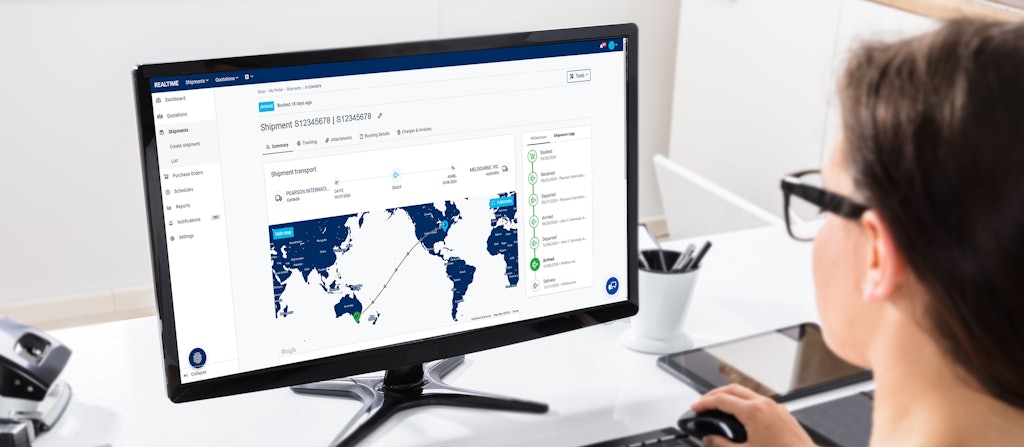
Keep track of everything at all times: with our Track & Trace system, you can follow all the important milestones – from departure and arrival to customs clearance and final delivery. Röhlig Realtime shows you the current status of your orders, including customs clearance progress. - Competent advice:
Our specialists identify potential pitfalls early on – such as missing documents or incorrect commodity codes – and provide you with comprehensive advice on customs tariffs, required licences or health certificates. The aim is to avoid unexpected fees and delays. - Local support worldwide:
Whether at the port or airport, Röhlig offers comprehensive customs services in Mexico through its branches. This means you receive support no matter where your shipment arrives. - Smooth coordination:
A dedicated contact person accompanies you throughout the entire process. They monitor the status of your shipment, maintain direct contact with the customs authorities and ensure that all compliance requirements are met before delivery.
Specific regulations for certain goods
- In the case of the textile, clothing and footwear industry, the importer must be registered in the Padrón for textile, clothing and footwear products.
- Foreign medical devices and health products must not only comply with all applicable standards, but also have a legally appointed representative or distributor in Mexico who is registered with the Ministry of Health.
Environmental and safety regulations
- Packaging guidelines
Wooden packaging (e.g. pallets, crates) must be treated and marked in accordance with the ISPM 15 standard. - Transport of dangerous goods
Compliance with international standards (ADR, RID, IMDG, IATA); correct UN labelling and safety data sheets in Spanish or English required - Mexican standard NOM-002
Stipulates comprehensive measures for the protection of the environment and safety for the transport of hazardous substances and waste by land, air and sea - Material specifications
Packaging must not contain any prohibited substances (e.g. certain heavy metals or flame retardants) - Sustainability
Recyclable, reusable or biodegradable packaging is preferred; single-use plastic packaging is increasingly restricted - Labelling requirements
Dangerous goods, foodstuffs and consumer goods must be labelled with clear safety instructions, ingredients and origin labels in Spanish
Risks on the Germany-Mexico freight route
Low water levels: Heat waves in Western Europe can lower the water level of the Rhine in Germany, which hinders shipping and increases freight costs for freight owners due to additional surcharges, as their ships cannot sail fully loaded
Cargo theft is a serious, everyday challenge for logistics in Mexico, especially on the main routes in the centre of the country. Active risk management is therefore not an optional extra, but part of the logistics strategy. Professional security concepts that include GPS tracking, route analysis and verified partners are crucial for reliably securing shipments.
User-Friendly Online Platform
The intuitive online platform Röhlig Realtime makes it easy to request quotes, book shipments, and track your cargo in real-time.
Personalised Support
Dedicated account managers assist you throughout the booking process, ensuring all your requirements are met.
Transparent Pricing
Receive instant quotes with clear pricing, helping you make informed decisions without hidden fees.