Freight shipping from Australia to New Zealand
The contents on this page:
Trade route details — Trust our expertise
In addition to their geographical proximity, Australia and New Zealand have also enjoyed a political connection for many years. At the heart of the trade relationship is the Australia-New Zealand Closer Economic Relations Trade Agreement (ANZCERTA), which came into force in 1983. This agreement is one of the most comprehensive and successful free trade agreements in the world. It removed virtually all tariffs and trade barriers for goods, creating one of the most open markets in the world.
The far-reaching provisions of ANZCERTA (or CER for short), which also cover the service sector, have led to close economic exchange. This agreement is flanked by the Trans-Tasman Mutual Recognition Arrangement (TTMRA): goods that may be legally sold in one country can – with a few exceptions – also be marketed in the other country.
At the same time, numerous professional qualifications are mutually recognised. This reduces market entry costs, speeds up processes and increases planning security in supply chains.
Overall, exporters on both sides of the Tasman Sea benefit from low formal barriers, fast clearance times and harmonised standards. At the same time, the strict biosecurity controls of both countries remain in place!
Prospects for trade between Australia and New Zealand
The partnership outlined above, which has been cultivated for decades at all relevant levels, shows no signs of fatigue. Occasional differences have so far been dealt with through partnership dialogue.
We can therefore confidently assume that economic cooperation will continue to deepen. A cornerstone of this is the Trans-Tasman Relationship Roadmap 2035, which sets out a roadmap for the future partnership.
Important export goods from Australia to New Zealand
- Telecommunications equipment & parts (HS 85*)
One of the largest commodity items in Trans-Tasman trade; the Australian Department of Foreign Affairs and Trade (DFAT) reports exports of around A$ 872 million for "telecom equipment & parts" in 2024 - Medicines / packaged medicines (HS 3004)
In 2023, New Zealand sourced packaged medicines primarily from Australia (approx. US$ 210 million); stable demand in the human and veterinary sectors - Aluminium oxide (alumina, HS 2818)
Key raw material for the Tiwai Point aluminium plant; in 2023, New Zealand imported alumina worth approximately US$ 234 million, almost all of it from Australia; the supply comes mainly from Australian refineries - Prepared animal feeds/pet food (HS 2309)
Strong FMCG product group in AU→NZ flow; in 2023, Australian exports of dog food/cat food to New Zealand amounted to around US$ 73.5 million. - Confectionery & chocolate products (HS 1806)
Regular deliveries in several subheadings; in 2023, NZ imported around US$ 54.7 million worth of "not in blocks/slabs" from Australia alone; overall, chocolate is one of the most significant FMCG flows in the relationship
Note: The ranking of individual items varies depending on the year and subcategory. However, the product groups mentioned are consistently among Australia's most important goods exports to New Zealand on the Trans-Tasman route.
* HS code (Harmonised System code) is an internationally standardised system of numbers for classifying goods in international trade.
Classic AU to NZ shipping routes
Sea freight Australia – New Zealand
- Sydney (Port Botany) / Melbourne / Brisbane → Auckland / Tauranga
High frequency in Trans-Tasman traffic for consumer goods, industrial goods, FMCG and refrigerated cargo - Melbourne / Sydney → Lyttelton (Christchurch)
Central route for the South Island, important for machinery, building materials and food - Brisbane → Auckland / Tauranga
Attractive option for exports from Queensland, including agricultural, refrigerated and project cargo - Fremantle (Perth) → Auckland / Lyttelton
Western Australian departures with lower frequency, suitable for FCL, project and selected refrigerated transport
Typical transit times (port to port): approx. 4–12 days, depending on port of departure/destination, service frequency, transshipment and shipping company rotation.
Connections between Sydney/Melbourne and Auckland/Tauranga are particularly fast, taking approx. 3–6 days. At the upper end of the scale are routes from Fremantle to the South Island (e.g. Lyttelton/Port Chalmers) or services with intermediate stops and feeder chains.
Air freight Australia – New Zealand
- Sydney (SYD) / Melbourne (MEL) → Auckland (AKL)
Most important air freight routes with daily direct connections for time-critical shipments such as high-tech, pharmaceuticals and spare parts - Sydney (SYD) / Melbourne (MEL) → Christchurch (CHC)
Direct South Island connection, frequently used for temperature-controlled goods and industrial goods - Brisbane (BNE) → Auckland (AKL) / Wellington (WLG)
Strong belly capacities, relevant for express and e-commerce shipments - Perth (PER) → Auckland (AKL)
Usually via the east coast or transit ports, suitable for high-value goods with predictable transit times
Typical transit times (airport to airport): approximately 1–3 days depending on the route, carrier network and handling. Express solutions usually take 1–2 days.
Particularly fast connections are SYD/MEL → AKL with several daily frequencies. Slightly longer times result for less frequented routes or transhipment connections, e.g. PER → AKL via SYD/MEL.
Our Logistics Services at a glance
Australia
New Zealand
General Services
Certifications
Upcoming customer shipments
Röhlig: strong logistics services for the Australia–New Zealand trade route
Whether sea freight or air freight – Röhlig Logistics delivers tailor-made door-to-door solutions on the Trans-Tasman corridor. We take care of pre- and post-carriage, customs clearance, biosecurity compliance and complete document management – tailored to the requirements of DAFF Biosecurity in Australia and Biosecurity New Zealand (MPI) in New Zealand.
This allows you to navigate safely through inspections, ISPM 15 requirements and package- or container-related documentation such as packing declarations and treatment certificates.
Sea freight from Australia to New Zealand
Important seaports on the Australia–New Zealand trade route
- Melbourne, AU
Australia's largest container port with high capacity and frequent departures to the North and South Islands, strong in consumer goods, industrial goods and refrigerated cargo - Sydney (Port Botany), AU
Central hub of the east coast with numerous Trans-Tasman services and modern terminal infrastructure - Brisbane, AU
Important port for exports from Queensland, relevant for agricultural, food and reefer cargo - Fremantle (Perth), AU
Most important deep-water port on the west coast, option for Western Australia with lower frequency and suitability for FCL, project and selected refrigerated transport - Auckland, NZ
New Zealand's most important container port and consumer goods hub on the North Island - Tauranga, NZ
New Zealand's largest transhipment port with efficient hinterland connections, strong in container and reefer logistics - Lyttelton (Christchurch), NZ
Main gateway to the South Island, relevant for machinery, building materials and food - Wellington, NZ
Regional supply interface with connections via the Cook Strait, also for Ro/Ro and containers - Port Chalmers (Dunedin), NZ
South Island location with a focus on export goods and project-related cargo
Examples of sea freight transit times
- FCL: 40' container Melbourne → Auckland: approx. 3–6 days (port-to-port)
- LCL: 1,000 kg consumer goods Sydney → Lyttelton: approx. 6–10 days (port-to-port), door-to-door typically 10–14 days
- FCL: 40' container Fremantle → Lyttelton: approx. 7–12 days (port-to-port), attractive option for shipments from Western Australia with more direct rotations to the South Island
Air freight from Australia to New Zealand
Important airports on the Australia–New Zealand trade route
- Sydney (SYD), AU
Australia's most important air freight hub for time-critical shipments to Auckland and Christchurch - Melbourne (MEL), AU
High proportion of belly freight with several daily frequencies to the North and South Islands - Brisbane (BNE), AU
Strong connection to Auckland and Wellington, relevant for express and e-commerce shipments - Perth (PER), AU
West Coast gateway, mostly via the East Coast or with a transfer, suitable for high-value goods with a predictable transit time - Auckland (AKL), NZ
New Zealand's largest air freight hub, central distribution function for the North Island - Christchurch (CHC), NZ
Primary South Island airport for temperature-controlled and time-critical industrial goods - Wellington (WLG), NZ
Supplementary capacity for regional distribution and express freight
Example of an air freight shipment
- Shipment: 150 kg of high-tech components from Melbourne (MEL) to Auckland (AKL)
- Transit time: 1–3 days (door-to-door)
- Typical use: time-sensitive spare parts, temperature-controlled pharmaceutical shipments or high-value electronics
Seasonal and operational risks on the AU–NZ trade lane
- Weather and sea conditions in the Tasman Sea can affect schedules, especially during the winter months
- Peak seasons around November–February and before public holidays lead to increased terminal utilisation and capacity
- Labour disputes in Australian seaports – strikes and operational restrictions occur periodically at major container terminals (including Sydney/Port Botany and Melbourne), usually in connection with collective bargaining or operator disputes
- Strict biosecurity controls in Australia and New Zealand may require random checks, cleaning or additional documentation
- Terminal slot systems and urban access restrictions require forward-looking pre- and post-carriage management
- Infrastructure disruptions in New Zealand, such as weather-related road closures or Cook Strait ferry cancellations, can delay distribution between the North and South Islands.
Röhlig continuously monitors these factors and proactively adjusts routing, buffer times, container and capacity planning – for predictable transit times and maximum supply chain stability.
Customs and import regulations in New Zealand
Key requirements:
- Complete, consistent trade documents - Commercial invoice, packing list, freight documents (B/L or AWB), proof of origin in accordance with CER rules, if applicable
- Precise description of goods and correct HS code classification as the basis for customs duty, biosecurity assessment and GST
- Importer setup in New Zealand, including an authorised licensed customs broker and registration for electronic submissions (Trade Single Window)
- Biosecurity clearance by Biosecurity New Zealand: shipments, packaging and containers must be free of soil, seeds, plant debris and pests
- Wooden packaging and pallets must be ISPM 15 compliant, clean and properly marked
- Compliance with product-specific approvals and requirements, e.g. food, animal and plant products, chemicals, medical devices
Special regulations:
- Strict biosecurity requirements and import health standards for each product group, especially for food, agricultural products, wood, plants, seeds and animal products
- Vehicles, machinery and used equipment must be thoroughly cleaned, free of organic material and, if necessary, accompanied by proof of cleaning
- Dangerous goods in accordance with IMDG or IATA DGR with complete DG documentation; batteries only in accordance with current special regulations
- Food imports often require approval and certification, including health certificates and, where applicable, labelling requirements
- Chemicals and substances are also subject to New Zealand chemicals legislation, with registration and labelling requirements where applicable
- Medical devices and pharmaceutical products may require approvals or special documentation, including temperature control and verification documentation
Customs duties and taxes:
- Goods originating in Australia generally benefit from duty-free treatment under the CER, provided that the rules of origin are met and documented.
- For goods without preferential origin, the respective third-country customs duty rate according to the New Zealand customs tariff applies.
- GST (Goods and Service Tax – New Zealand's value added tax) is generally 15% of the assessable value of goods, freight/insurance and, where applicable, customs duties
- Additional import and biosecurity-related fees may apply, e.g. for entry and inspection procedures
- For low-value B2C shipments, GST may be levied on the seller under certain conditions; for B2B shipments, it is typically levied at the border
Tips for expedited customs clearance in New Zealand
- Pre-register import entry and biosecurity details electronically in advance (pre-lodgement in the Trade Single Window)
- Involve a licensed customs broker early on, finalise correct HS codes and proofs of origin before shipment
- Minimise biosecurity risks: dust- and dirt-free goods, clean containers, ISPM 15-compliant wooden packaging, no plant residues or soil
- Obtain product-specific approvals and certificates (e.g. health certificates, import permits) before departure and make them available as eDocs
- For refrigerated and pharmaceutical goods, coordinate temperature concept, data loggers and SOPs, send pre-alert to recipient/broker
- Provide complete, clear invoice data: Incoterms, currency, detailed description of goods, net/gross weight, number of packages, correct values and cost components
- Plan terminal and delivery windows in good time, especially during peak times and in metropolitan areas
- Where possible, use eAWB/eB/L and digital document flows to reduce handling times at the border
Our expertise is your key to success in trans-Tasman trade. Our local customs and biosecurity experts ensure that your shipments comply with all regulations – from correct documentation for duty-free import in accordance with CER to compliance with strict New Zealand biosecurity standards. Trust Röhlig Logistics for punctual and efficient processing!
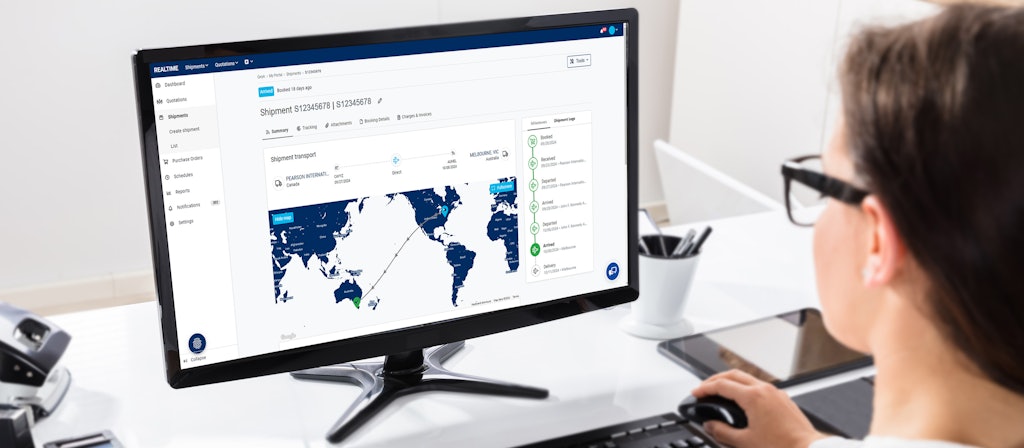
User-Friendly Online Platform
The intuitive online platform Röhlig Realtime makes it easy to request quotes, book shipments, and track your cargo in real-time.
Personalised Support
Dedicated account managers assist you throughout the booking process, ensuring all your requirements are met.
Transparent Pricing
Receive instant quotes with clear pricing, helping you make informed decisions without hidden fees.